Understanding the Basics of Billiards
What is Billiards?
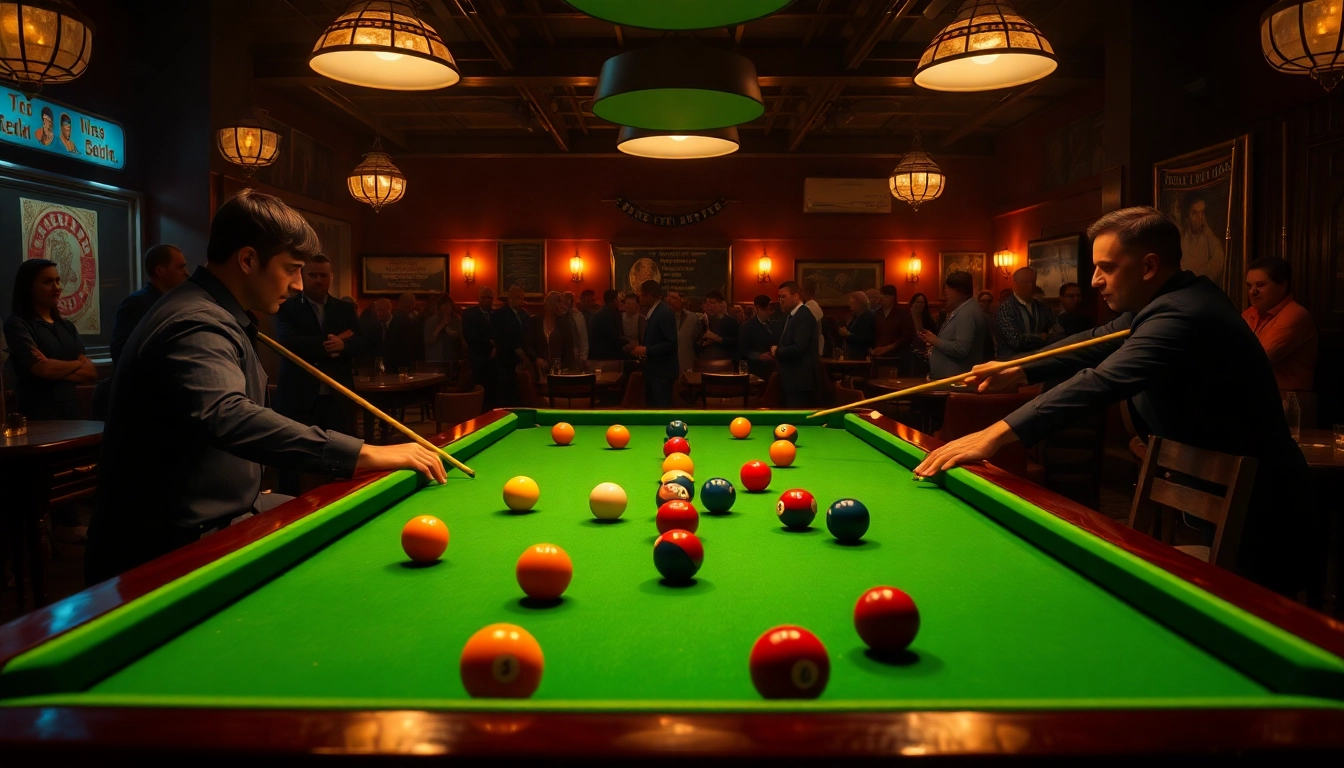
Billiards encompasses a variety of cue sports that are generally played on a rectangular table covered with cloth, featuring six pockets along the sides. The objective typically involves striking balls into pockets using a cue stick. The term 'billiards' can refer to different forms depending on the playing style and has a rich history that intertwines with various games like pool and snooker. Recognized both as a recreation and a competitive sport, Billiards offers an engaging way to enhance skills such as hand-eye coordination, strategic thinking, and precision.
Key Equipment for Billiards
To play billiards, one requires several essential pieces of equipment:
- Pool Table: The fundamental surface where the game is played, typically sized between 7 to 9 feet, depending on the type of billiards.
- Cue Sticks: A slim, tapered stick used to strike the balls. Cues vary in weight, length, and materials, which can affect gameplay.
- Billiard Balls: Standardized balls, typically a set of 15 for pool and 3 for carom games. Each ball is carefully designed for optimal performance.
- Chalk: Used on cue tips to increase friction and control during play.
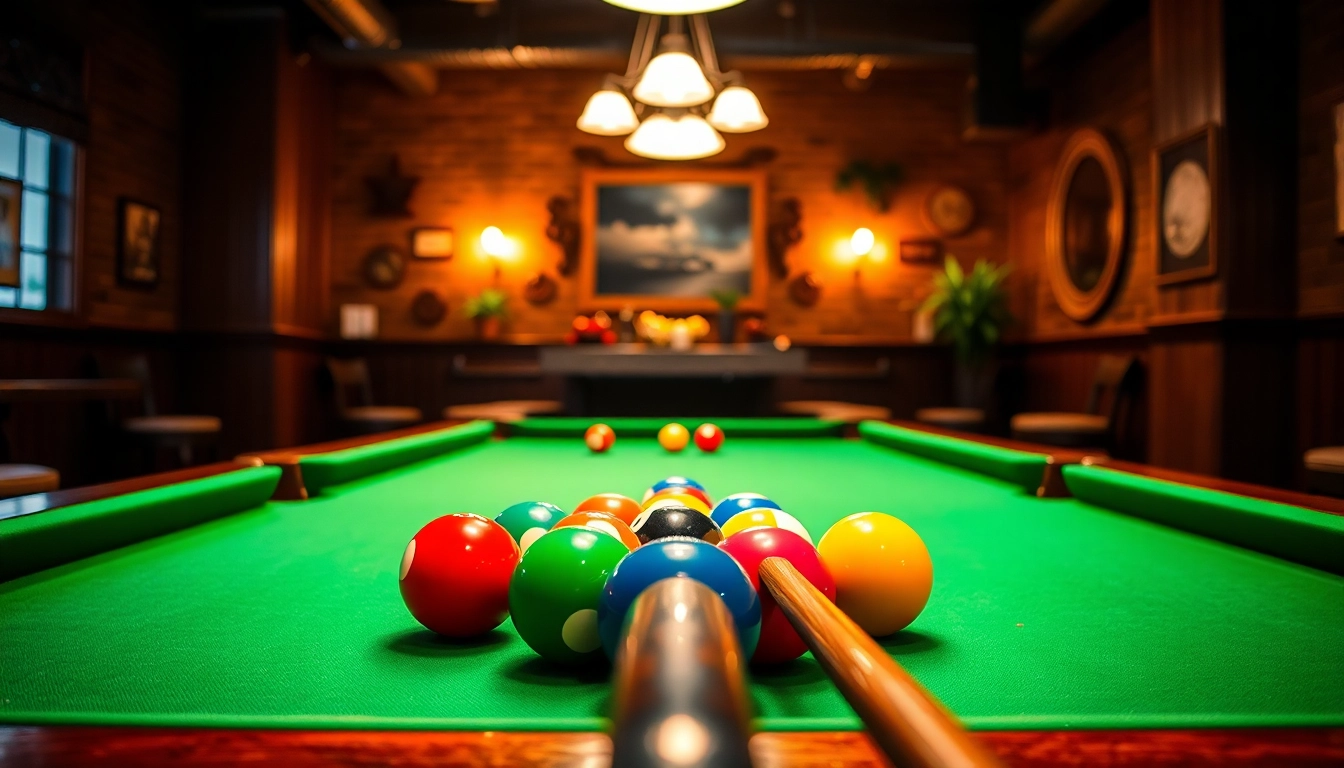
- Racks: Tools for organizing the balls at the start of a game.
Basic Rules of the Game
While different billiard games have specific rules, some core principles are universally applicable:
- Games usually start with a break shot, followed by alternating turns between players.
- The goal typically involves pocketing balls in a specific order, depending on the game format.
- Fouls occur for reasons like failing to hit your own ball first or leaving the cue ball in an unfavorable position.
Techniques to Improve Your Billiards Game
Stance and Grip Fundamentals
An effective stance is crucial for balance and aiming in billiards. Stand with your feet shoulder-width apart, slightly bending your knees. Your non-dominant foot should be positioned forward. Ensure your grip on the cue is firm yet relaxed, allowing for smooth movement during your shot. The bridge hand, which supports the cue, should be stable and placed at a comfortable distance from the cue ball.
Aiming Techniques for Billiards
Aiming accurately involves a combination of mental visualization and physical alignment. Use a consistent aiming technique, such as the ghost ball method, which visualizes the path of the cue ball to the target ball. Focus on each shot by taking a moment to breathe and align your body, cue, and target line properly.
Follow Through and Cue Ball Control
Follow-through is a vital component of cue sports. It requires the cue to extend smoothly after making contact with the cue ball. This motion helps maintain accuracy and control over the cue ball's speed and direction. Practice different follow-through techniques to master control; this leads to improved placement and strategic opportunities during gameplay.
Advanced Billiards Strategies
Defensive Play and Positioning
Defense in billiards is as critical as offense. Quality defensive play involves leaving your opponent in a challenging position after your shot. This can be achieved by positioning the cue ball behind another ball (a 'safety' shot) or making specific shots that limit the opponent's options. Understanding the layout of the table dynamically during the game helps develop effective strategies.
Shot Selection and Variations
Players should be proficient in various shot types, including breaks, jump shots, and bank shots. Knowing when to apply each shot can significantly influence the game's outcome. Regularly experiment with different shot types during practice to discover their nuances and how they can be incorporated into your gameplay.
Analyzing Opponents in Billiards
Being observant of your opponent's habits can provide critical insight for strategy development. Pay attention to their strengths and weaknesses, particularly in shot selection, stance, and potential mistakes. This analysis allows you to predict their next moves and position yourself accordingly, further enhancing your competitive edge.
Common Challenges in Billiards and How to Overcome Them
Dealing with Performance Anxiety
Performance anxiety is common in competitive settings, leading to hesitation or mistakes. To cope, players should implement relaxation techniques such as breathing exercises to calm nerves before and during gameplay. Familiarity with tournament conditions through regular practice can also help minimize anxiety, leading to improved performance.
Correcting Common Mistakes in Billiards
Common errors include misalignment, over or under-hitting the cue ball, or inconsistent grip. Identify these mistakes by keeping a game journal, noting specific issues encountered during play. Work on correcting these tendencies systematically, pairing feedback with practice drills aimed at refining your mechanics.
Practicing Effectively for Improvement
Deliberate practice is more effective than casual play. Set specific goals for each practice session, focusing on one skill or shot type at a time. Incorporate drills that emphasize aim, cue ball control, and defensive strategies. Regular evaluation of progress and adjusting practices accordingly can yield substantial improvements over time.
Frequently Asked Questions About Billiards
What are the basic rules of billiards?
The core rules include knowing the objective, using the correct order of shots, and understanding fouls that can occur during gameplay.
How can I improve my aim in billiards?
Improving aim involves practicing your stance, grip, and following consistent aiming techniques, along with regular practice sessions for muscle memory.
What equipment do I need for billiards?
Essential billiards equipment includes a standard pool table, billiard balls, a cue stick, chalk, and sometimes, a rack depending on the game type.
How do I choose the right cue stick for billiards?
Choosing the right cue stick depends on your comfort level, playing style, and the weight and balance that feels natural during play.
Can billiards be played solo?
Yes, billiards can be played solo with various practice drills or against virtual opponents using billiards apps to enhance your skills independently.
Contact Information
Call Us: +1 615-624-7821Email: [email protected]Address: 1276 Northwest Broad Street, Murfreesboro, TN, USA