
Concept and Structural Sketching
Early sketches focus as much on how the unit stands, folds, or attaches to a shelf as on how it looks. Structural feasibility decided here saves a costly redesign later in the process. The difference rarely shows up in the initial proposal — it shows up a few weeks later, once the first batch or installation is out in the real world. Treat the first rollout or installation as a pilot even if it isn't formally labelled one — the lessons from it should shape everything that follows. The gap between a well-planned outcome and a rushed one here is usually not subtle — it tends to be visible to anyone who sees both side by side.
Prototyping and Physical Sampling
A physical sample — not just a digital render — is tested against real shelf conditions: weight tolerance, stacking, and how it survives a simulated delivery journey. This is the stage where most design flaws actually surface. It's one of those details that looks minor on a spec sheet but has an outsized effect on how the finished piece actually performs in the field. The cost of getting this wrong scales with order size, which is exactly why it deserves more attention on large rollouts than the line-item budget might initially suggest. Teams that have been burned by skipping this step once rarely skip it a second time, which is often the fastest way this lesson gets learned.
Material Sourcing and Print Production
Once the prototype is approved, POSM design and manufacturing moves into bulk material sourcing and print production, where color consistency across a large batch becomes the main quality control focus. This is one of the areas where a slightly higher upfront cost or a slightly longer timeline pays for itself well before the campaign or installation is over. Document the decision and the reasoning behind it — the next campaign or the next outlet manager will likely ask the same question again. It's one of those details that looks minor on a spec sheet but has an outsized effect on how the finished piece actually performs in the field.
Packing, Logistics, and Store Rollout
The final and most underestimated stage is getting finished units to hundreds of individual outlets intact and on schedule — packing design to prevent damage in transit is as important as the display design itself. In practice, teams that treat this as a checklist item rather than a strategic decision tend to revisit it — and pay for it — a second time later in the project. None of this needs to be complicated — a short written checklist covering just this point is often enough to prevent the most common version of this mistake. A quick conversation about this at the brief stage costs nothing; discovering it during production or after installation almost always costs more than it should have.
Final Word
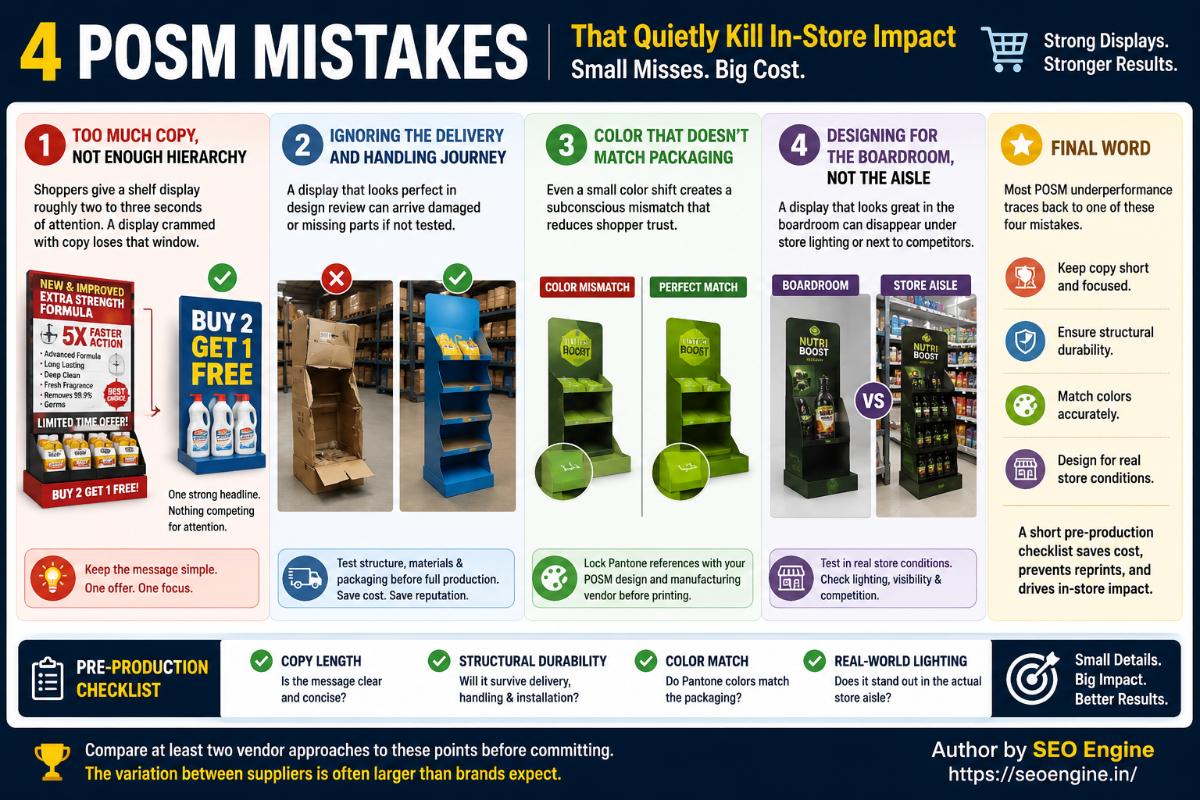
Each stage in POSM manufacturing has its own failure points, and skipping the prototyping stage in particular is the single most common cause of expensive reprints once a full batch reaches stores. Retailers and store managers notice this more than brands often expect, and their reaction — keeping a piece up or pulling it down — is a useful, honest signal. Where budget is limited, this is a better place to spend the extra rupee than on cosmetic polish that shoppers or visitors are less likely to notice at all. None of this needs to be complicated — a short written checklist covering just this point is often enough to prevent the most common version of this mistake.
Author bySEO Engine